PDURKCCY - Complete Guide to Uttar Pradesh State Health Card, Eligibility, Benefits and Registration Process
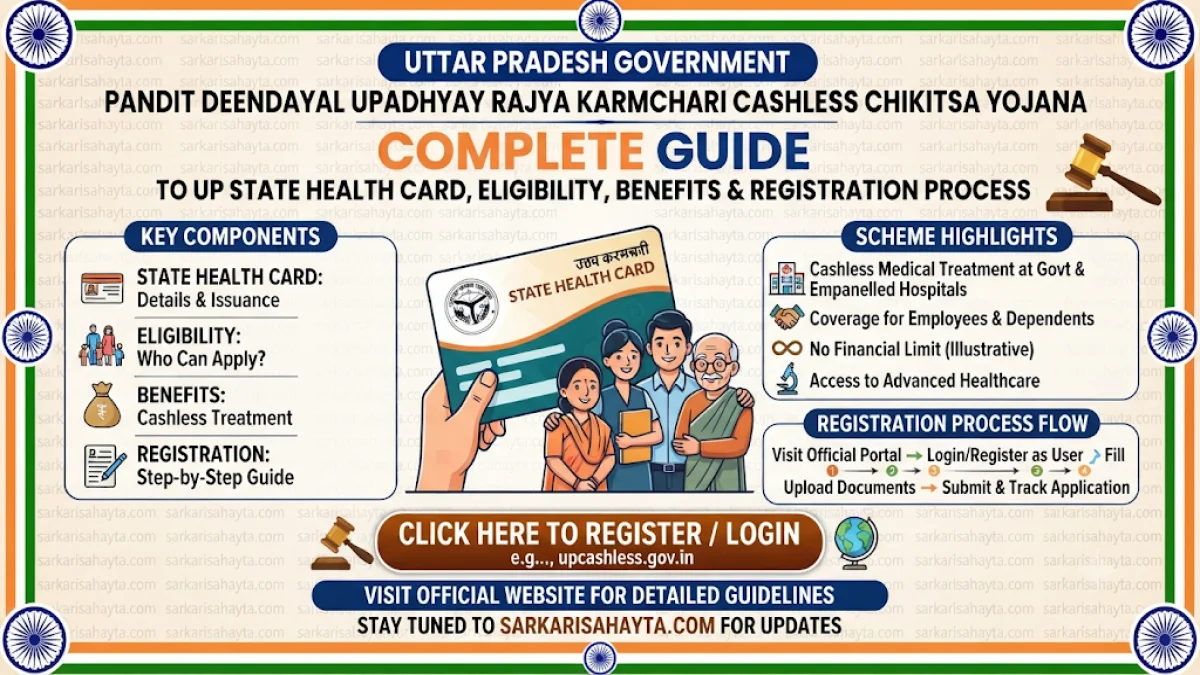
Healthcare expenses can place a significant financial burden on families, especially during medical emergencies. To provide quality healthcare support and financial security to government employees and pensioners, the Government of Uttar Pradesh introduced the Pandit Deendayal Upadhyay Rajya Karmchari Cashless Chikitsa Yojana. This ambitious healthcare initiative enables eligible beneficiaries to receive cashless treatment through empanelled hospitals using a State Health Card.
The scheme represents a major step toward improving healthcare accessibility for serving government employees, retired government personnel, and their dependent family members. By reducing out-of-pocket medical expenditure and providing access to quality treatment facilities, the program strengthens the social security framework for thousands of beneficiary families across Uttar Pradesh.
What is Pandit Deendayal Upadhyay Rajya Karmchari Cashless Chikitsa Yojana?
The Pandit Deendayal Upadhyay Rajya Karmchari Cashless Chikitsa Yojana is a government healthcare scheme designed to provide cashless medical treatment facilities to Uttar Pradesh State Government employees, retired government employees, and their eligible dependents.
The scheme operates under the provisions of the Uttar Pradesh Government Servant (Medical Attendance) Rules and facilitates treatment through empanelled private hospitals as well as government healthcare institutions.
A State Health Card serves as the primary identification document through which beneficiaries can avail themselves of healthcare services under the scheme.
Objectives of the Scheme
The primary objective of the scheme is to ensure timely and affordable medical treatment without requiring beneficiaries to make immediate payments during emergencies or hospitalization.
Major goals of the initiative include:
- Providing cashless healthcare access.
- Reducing medical financial burden on families.
- Offering quality healthcare facilities through empanelled hospitals.
- Expanding healthcare coverage for employees and pensioners.
- Digitalizing beneficiary identification through State Health Cards.
- Ensuring faster treatment during medical emergencies.
Who Can Benefit From the Scheme?
The scheme has been designed specifically for individuals associated with the Uttar Pradesh Government and their dependent family members.
- Serving Uttar Pradesh State Government Employees.
- Retired State Government Employees.
- Eligible Dependent Family Members.
- Pensioners covered under applicable rules.
Every eligible beneficiary is required to obtain a State Health Card to access the cashless treatment facility.
Major Benefits of the Cashless Health Scheme
The healthcare benefits available under the scheme make it one of the most significant employee welfare programs in the state.
Cashless Treatment at Private Hospitals
Beneficiary families can receive cashless medical treatment at private hospitals empanelled under the Ayushman Bharat network.
The scheme provides cashless treatment coverage up to ₹5 lakh per family per year in empanelled private hospitals.
Unlimited Treatment in Government Hospitals
One of the most important advantages is that treatment at government medical colleges, government hospitals, and government healthcare institutions is available without the financial limits applicable to private hospitals.
This ensures access to specialized treatment facilities for serious medical conditions.
Key Features of the State Health Card
The State Health Card is a crucial element of the scheme and acts as the beneficiary identification mechanism.
- Provides beneficiary authentication.
- Facilitates cashless treatment approval.
- Ensures faster verification process.
- Links healthcare benefits to registered beneficiaries.
- Supports digital healthcare management.
- Simplifies hospital admission procedures.
Cashless Treatment Coverage Explained
The scheme follows a dual healthcare support structure that combines both private and government healthcare facilities.
| Hospital Type | Coverage |
|---|---|
| Empanelled Private Hospitals | Up to ₹5 Lakh Per Family Per Year |
| Government Hospitals | No Financial Limit |
| Government Medical Colleges | No Financial Limit |
| Government Medical Institutions | No Financial Limit |
Importance of Aadhaar-Linked Mobile Number
Registration for the State Health Card generally requires Aadhaar-linked mobile verification. Beneficiaries should ensure that their mobile number is linked with Aadhaar records before beginning the registration process.
This helps facilitate OTP-based authentication and secure identity verification during the application process.
Information Required During Registration
Applicants may be required to provide essential personal and service-related details while applying for the State Health Card.
- Employee or Pensioner Status.
- Department Name.
- District Information.
- DDO Code.
- Present Designation.
- Pay Level Information.
- Office Details.
- Name of Applicant.
- Date of Birth.
- Mobile Number.
- Email Address.
- Aadhaar Number.
- Address as per Aadhaar.
- Photograph.
Step-by-Step State Health Card Registration Process
- Open the State Health Card registration portal.
- Verify Aadhaar-linked mobile number through OTP.
- Select Employee or Pensioner category.
- Enter departmental and employment details.
- Provide personal information carefully.
- Upload photograph as required.
- Verify all entered details.
- Submit the application form.
- Keep a copy of the application reference for future use.
Why Government Employees Should Register Early
Healthcare emergencies are often unpredictable. Completing registration before any medical need arises ensures faster access to treatment facilities. Registered beneficiaries with valid State Health Cards can avoid delays in verification and treatment approval processes during urgent situations.
Early registration also helps beneficiaries verify dependent details, update records, and become familiar with the scheme's features and empanelled medical facilities.
Advantages for Retired Government Employees
Medical expenses typically increase after retirement due to age-related health conditions and ongoing medical requirements. The scheme offers retired government employees a structured healthcare support system, reducing financial stress while improving access to treatment.
Through cashless services and government hospital coverage, retirees can receive healthcare support without facing immediate hospitalization costs.
Role of Empanelled Hospitals
Empanelled hospitals play an important role in ensuring successful implementation of the scheme. They provide:
- Cashless admission facilities.
- Treatment under approved healthcare packages.
- Beneficiary verification support.
- Medical documentation processing.
- Coordinated treatment assistance.
Important Points Beneficiaries Should Remember
- Maintain updated Aadhaar information.
- Use Aadhaar-linked mobile number for registration.
- Apply for the State Health Card promptly.
- Verify dependent details carefully.
- Keep digital and physical copies of registration records.
- Check empanelled hospital details before treatment.
- Ensure all information is entered accurately.
Future Impact of the Scheme
The Pandit Deendayal Upadhyay Rajya Karmchari Cashless Chikitsa Yojana has the potential to transform healthcare accessibility for government employees and pensioners throughout Uttar Pradesh. By combining technology-based verification, healthcare digitization, and cashless treatment facilities, the scheme contributes significantly to employee welfare and public healthcare efficiency.
Conclusion
The Pandit Deendayal Upadhyay Rajya Karmchari Cashless Chikitsa Yojana is an important healthcare initiative aimed at safeguarding the medical needs of Uttar Pradesh Government employees, pensioners, and their families. With cashless treatment up to ₹5 lakh annually in empanelled private hospitals and unlimited treatment in government medical institutions, the scheme offers substantial financial protection and healthcare security. Eligible beneficiaries should complete State Health Card registration as early as possible to maximize the benefits available under this comprehensive healthcare program.
Frequently Asked Questions (FAQs)
- What is Pandit Deendayal Upadhyay Rajya Karmchari Cashless Chikitsa Yojana?
- It is a healthcare scheme launched for Uttar Pradesh Government employees, retired government employees, and their eligible dependents to provide cashless medical treatment facilities.
- Who can avail benefits under this scheme?
- State Government employees, retired State Government employees, pensioners, and their eligible dependent family members can benefit from the scheme.
- What is the financial limit for private hospital treatment?
- Cashless treatment up to ₹5 lakh per family per year is available in empanelled private hospitals.
- Is there any financial limit for treatment in government hospitals?
- No. Beneficiaries can receive treatment in government hospitals and medical institutions without the financial limit applicable to private hospitals.
- What document is required to avail cashless treatment?
- Eligible beneficiaries must possess a valid State Health Card.
- What is the purpose of the State Health Card?
- The card is used for beneficiary identification and verification while availing healthcare services under the scheme.
- Can retired government employees use the scheme?
- Yes. Retired Uttar Pradesh State Government employees are eligible for cashless treatment benefits under the scheme.
- Why is an Aadhaar-linked mobile number important?
- It helps complete OTP-based verification during registration and authentication processes.
- Can dependent family members receive treatment under the scheme?
- Yes. Eligible dependent family members are covered under the scheme's benefits.
- What is the biggest advantage of this healthcare scheme?
- The combination of ₹5 lakh cashless treatment in private hospitals and unlimited treatment facilities in government healthcare institutions makes the scheme highly beneficial for eligible families.