
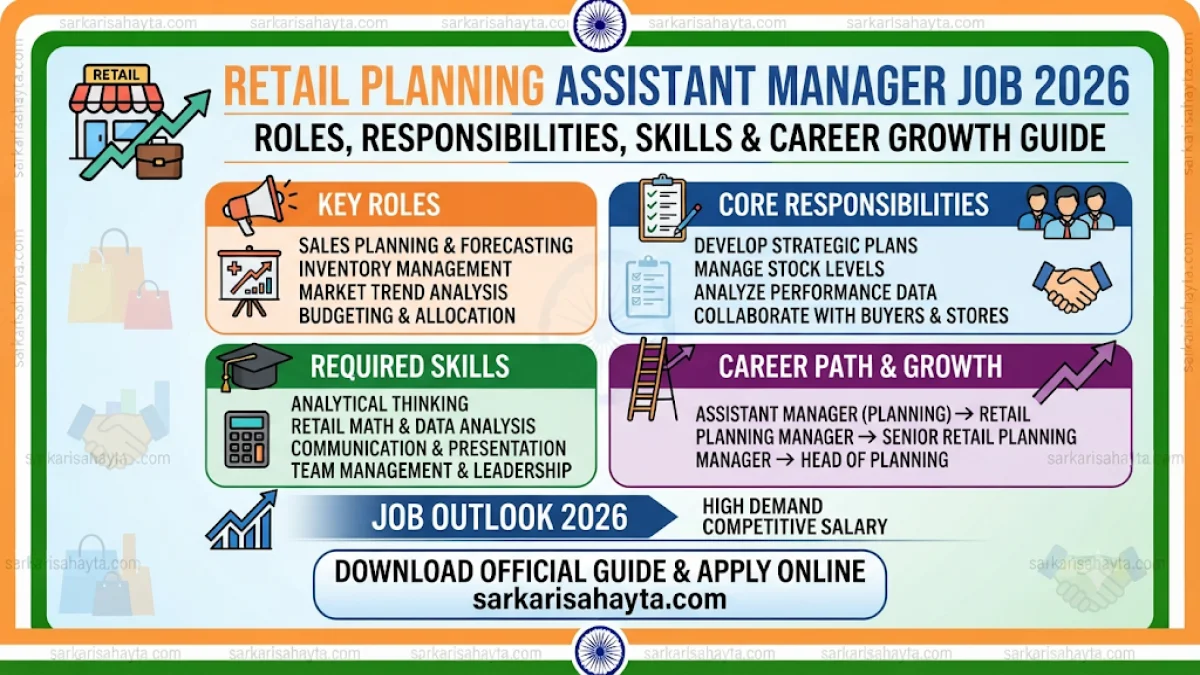
Retail Planning Assistant Manager Recruitment 2026: Full-Time Retail Strategy Opportunity in Vietnam
A leading organization has announced a recruitment opportunity for the position of Retail Planning Assistant Manager at BITEXCO Financial Tower, Ho Chi Minh City, Vietnam. Candidates with strong experience in retail operations, trade marketing, business planning, channel strategy, and sales analytics can apply for this full-time position before 30 November 2026.
Retail Planning Assistant Manager Vacancy 2026 Overview
| Post Name | Retail Planning Assistant Manager |
|---|---|
| Job Type | Full Time |
| Work Mode | On-Site |
| Location | BITEXCO Financial Tower, Ho Chi Minh City, Vietnam |
| Job ID | R121690 |
| Application Last Date | 30 November 2026 |
About the Position
The Retail Planning Assistant Manager is responsible for ensuring that products are available in the right retail outlets while maximizing retail investments and channel performance. The role focuses on retail mapping, sell-out planning, trade strategy, retail analytics, market intelligence, and ROI optimization.
Key Responsibilities
- Analyze retail stores and identify strategic business opportunities.
- Develop retail visibility and distribution standards.
- Monitor sell-out performance and retail KPIs.
- Support channel strategy and go-to-market initiatives.
- Manage retail investment planning and ROI analysis.
- Coordinate product launch execution plans.
- Track market trends and competitor activities.
- Work closely with sales, marketing, supply chain, and retail operations teams.
Qualification Required
- University Graduate.
- Business-related educational background preferred.
- Strong analytical and planning capabilities.
Experience Required
- Minimum 6 years of Trade Marketing or Retail Operations experience.
- Knowledge of sales and distribution systems.
- Understanding of retail business dynamics and trade concentration.
Essential Skills
- Leadership and Team Management.
- Communication and Presentation Skills.
- Negotiation Skills.
- Retail Analytics and Reporting.
- Microsoft Office Proficiency.
- Strong English Communication.
Position Overview
The Retail Planning Assistant Manager is responsible for analyzing retail markets, identifying growth opportunities, creating distribution strategies, monitoring retail execution, and supporting business teams with meaningful insights. The role requires close coordination with sales, marketing, retail operations, and product management teams to improve market performance.
Professionals in this role help organizations understand consumer buying behavior, retailer performance, competitor activities, channel effectiveness, and retail investment returns.
Key Responsibilities of a Retail Planning Assistant Manager
Retail Mapping and Segmentation
One of the primary responsibilities involves creating a detailed understanding of the retail landscape. This includes evaluating existing stores, identifying high-potential outlets, mapping growth opportunities, and classifying stores based on business potential.
- Analyze store-level performance.
- Identify strategic retail locations.
- Evaluate expansion opportunities.
- Create retail segmentation frameworks.
- Support market coverage planning.
Distribution and Visibility Strategy
Retail visibility directly impacts customer purchasing decisions. Retail planning professionals work closely with product and sales teams to establish visibility standards and improve product availability across multiple retail channels.
- Create retail visibility guidelines.
- Monitor retail execution standards.
- Improve distribution coverage.
- Track visibility compliance.
- Support retail competitiveness.
Sell-Out Target Planning
Successful organizations focus not only on product distribution but also on actual consumer sales. Retail Planning Assistant Managers develop sell-out targets and monitor field performance against business objectives.
- Set realistic sell-out targets.
- Track retail performance indicators.
- Analyze sales trends.
- Support corrective action planning.
- Drive retail productivity improvements.
Retail Reporting and Business Analysis
Data analysis is a fundamental component of the job. Decision-makers depend on accurate reporting and retail insights for strategic planning.
- Create retail dashboards.
- Analyze sales reports.
- Monitor KPI scorecards.
- Identify emerging trends.
- Support management reviews.
Channel Strategy and Market Development
Retail Planning Assistant Managers contribute significantly to channel development strategies. They work with cross-functional teams to improve market penetration and strengthen channel partnerships.
The role often involves identifying growth opportunities, understanding customer behavior, evaluating competitive positioning, and recommending new channel development initiatives.
- Support go-to-market strategies.
- Improve channel performance.
- Strengthen retailer relationships.
- Analyze market opportunities.
- Recommend business expansion solutions.
Trade Program Planning
Trade programs are essential for influencing shopper behavior and increasing product visibility. Retail planning teams collaborate with product marketing groups to design, evaluate, and optimize promotional activities.
By analyzing retail performance data and consumer insights, professionals can recommend effective promotional campaigns that improve both sales volume and market share.
Retail Intelligence and Competitive Analysis
Successful retail planning relies heavily on market intelligence. Professionals continuously monitor retail trends, competitor activities, pricing strategies, distribution practices, and consumer preferences.
- Collect retail insights.
- Track competitor activities.
- Analyze market dynamics.
- Evaluate promotional effectiveness.
- Support strategic planning decisions.
Retail Investment and ROI Planning
Retail investment management is one of the most strategic components of this role. Organizations invest significant resources in displays, promoters, trade incentives, visibility programs, and channel development activities.
The Retail Planning Assistant Manager evaluates investment effectiveness and ensures optimum return on investment (ROI).
- Manage retail budgets.
- Perform ROI analysis.
- Evaluate trade investments.
- Measure program effectiveness.
- Recommend optimization strategies.
Product Launch Planning Responsibilities
New product launches require coordinated retail execution. Retail planning professionals work with sales and marketing departments to ensure distribution availability, execution readiness, and launch success.
Their contribution helps organizations achieve wider product visibility, faster consumer adoption, and stronger initial market performance.
Retail Management Day Activities
Many organizations conduct routine Retail Management (RM) reviews to evaluate current business conditions and future priorities. Retail planning professionals play an important role by providing data-backed recommendations and market assessments.
This helps leadership teams make informed business decisions supported by real-time market intelligence.
Cross-Functional Collaboration
A Retail Planning Assistant Manager frequently works across multiple departments. The ability to collaborate effectively is considered one of the most important success factors for this position.
- Work with Product Marketing teams.
- Coordinate with Sales departments.
- Support Retail Operations teams.
- Collaborate with Supply Chain professionals.
- Participate in business planning discussions.
Required Qualifications
Organizations generally prefer candidates with strong academic backgrounds and relevant retail experience.
- University Graduate.
- Business Administration, Marketing, Economics, or related field preferred.
- Strong analytical capabilities.
- Experience in retail operations or trade marketing.
- Knowledge of sales planning methodologies.
Experience Requirements
Most Retail Planning Assistant Manager positions require significant experience in retail planning, sales operations, channel development, or trade marketing functions.
- Retail Operations Experience.
- Trade Marketing Experience.
- Sales Planning Experience.
- Business Analytics Experience.
- Distribution Management Experience.
Candidates with six or more years of relevant experience are often preferred for leadership-level planning roles.
Essential Skills for Success
Analytical Thinking
The ability to interpret data, identify trends, and generate business recommendations is one of the most valuable skills in retail planning.
Retail Knowledge
Understanding retail structures, store formats, distribution models, and shopper behavior is crucial for effective planning.
Communication Skills
Professionals must communicate complex business insights clearly to sales, marketing, and leadership teams.
Financial Understanding
Knowledge of budgeting, ROI analysis, investment planning, and business profitability greatly enhances decision-making capabilities.
Microsoft Office Expertise
Advanced knowledge of Excel, PowerPoint, and reporting tools is essential for preparing dashboards, reports, and performance reviews.
Career Growth Opportunities
Professionals who perform successfully in Retail Planning Assistant Manager roles often advance to senior leadership positions in sales strategy, category management, trade marketing, commercial planning, business intelligence, and retail operations management.
The experience gained in this role builds a strong foundation for broader business leadership responsibilities because it combines data analysis, strategic planning, financial management, and market execution expertise.
Why This Role Is Highly Valuable
Retail organizations increasingly depend on data-driven decisions to compete in complex markets. As a result, professionals capable of translating retail data into strategic actions are becoming critical assets for organizations across FMCG, consumer electronics, telecommunications, fashion, pharmaceutical, and retail sectors.
The Retail Planning Assistant Manager position offers a balanced blend of analytics, business strategy, sales coordination, and leadership exposure, making it one of the most rewarding careers in modern retail management.
Frequently Asked Questions (FAQs)
- What does a Retail Planning Assistant Manager do?
- A Retail Planning Assistant Manager analyzes retail performance, develops distribution strategies, monitors sales trends, manages retail investments, and supports business growth through data-driven planning.
- What qualifications are generally required for this role?
- Most organizations prefer university graduates, particularly in business, marketing, economics, or related disciplines.
- How much experience is usually required?
- Many employers seek candidates with approximately six years or more of experience in retail operations, trade marketing, sales planning, or related functions.
- Why is retail analysis important in this position?
- Retail analysis helps companies understand store performance, market opportunities, customer behavior, and investment effectiveness, enabling better business decisions.
- What skills are most important for retail planning professionals?
- Analytical thinking, retail knowledge, communication skills, financial understanding, reporting capabilities, and proficiency in Microsoft Office are highly important.
- What is retail mapping?
- Retail mapping involves evaluating retail stores, identifying strategic locations, assessing business potential, and creating effective market coverage plans.
- How does ROI analysis help retail organizations?
- ROI analysis measures the effectiveness of retail investments and helps organizations allocate resources more efficiently.
- What departments work closely with Retail Planning Assistant Managers?
- They commonly collaborate with sales, marketing, retail operations, supply chain, and product management teams.
- Can this role lead to higher management positions?
- Yes. Successful professionals often progress into senior roles in trade marketing, commercial planning, sales strategy, and business leadership.
- Why is this role important for business growth?
- The role supports strategic decision-making, improves retail execution, increases sales efficiency, and helps organizations maximize market opportunities.