
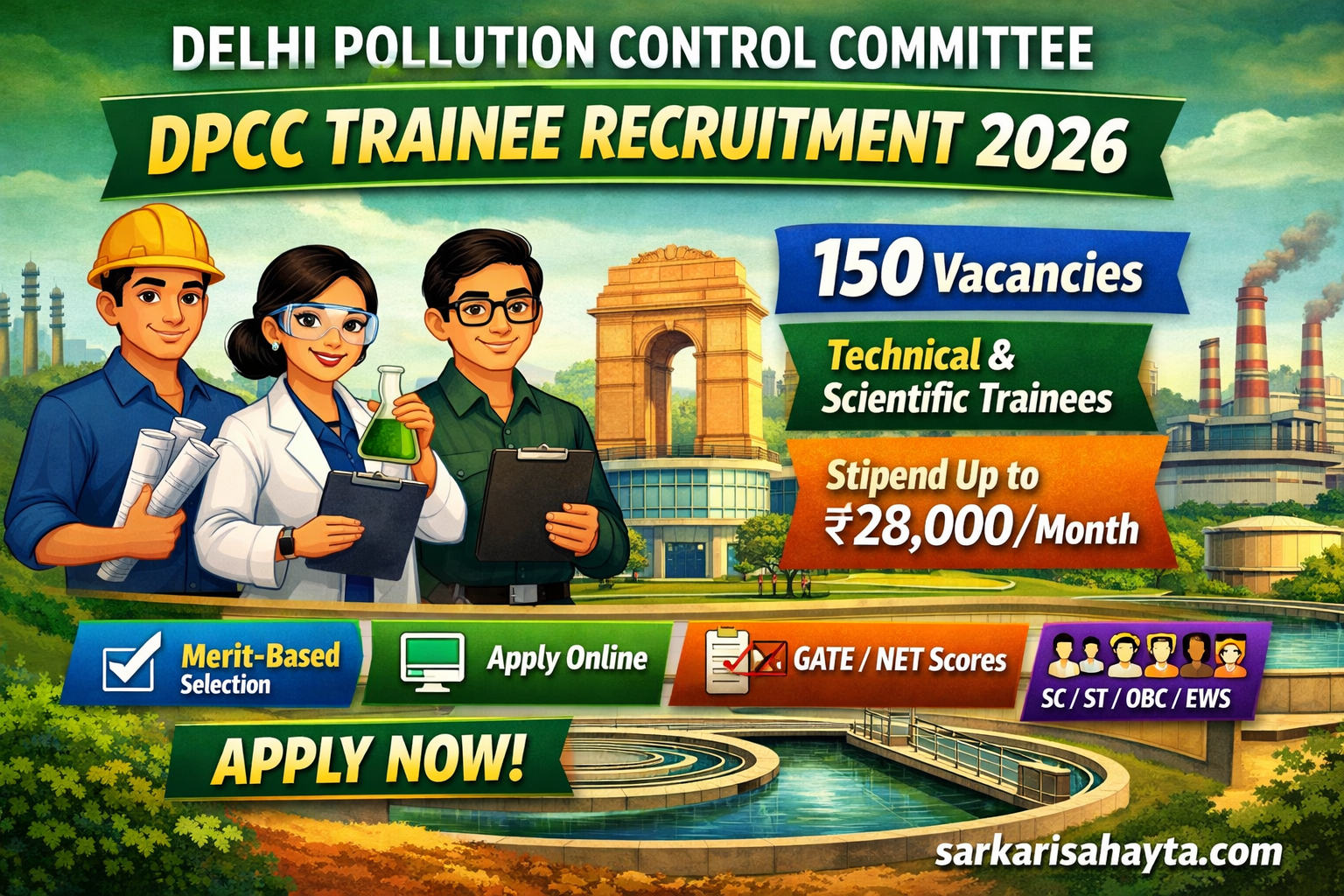
📢 The Delhi Pollution Control Committee (DPCC), under the Department of Environment, Government of NCT of Delhi, has announced an exciting opportunity for young professionals to join as Trainees on a contractual basis. This engagement offers a chance to work in one of India’s most vital environmental organizations, contributing to pollution control, sustainable development, and environmental monitoring across the capital city. The recruitment is open for both Technical and Scientific Trainees with attractive monthly stipends and growth prospects.
🏢 About DPCC
🌱 The Delhi Pollution Control Committee is the nodal agency responsible for implementing environmental laws and pollution control measures in Delhi. It operates under the Department of Environment, GNCTD, and plays a crucial role in monitoring air, water, and soil quality, enforcing pollution norms, and promoting eco‑friendly practices. The DPCC also collaborates with national bodies like the Central Pollution Control Board (CPCB) and the Ministry of Environment, Forest and Climate Change (MoEFCC) to ensure compliance with environmental standards.
📋 Post Details
🧾 The engagement is for the post of Trainee on a monthly stipend basis. The total number of vacancies is 150, distributed across various categories:
- 🧍♂️ SC – 22
- 🧍♀️ ST – 11
- 👥 OBC (NCL, Delhi) – 40
- 💠 EWS – 15
- ⚖️ UR – 62
- 🔢 Total – 150 Posts
💡 The tentative ratio between Technical Trainees (Engineering graduates) and Scientific Trainees (Science postgraduates) will be 10:1.
🎓 Educational Qualifications
📚 Candidates must have completed their qualifying examination in 2023 or later from a recognized university or institution. The eligibility criteria are divided into two categories:
🔧 Technical Trainee
- Bachelor’s Degree in Engineering (B.E. / B.Tech) in any of the following disciplines:
- 🏗️ Civil Engineering
- 🌊 Environmental Engineering
- ⚗️ Chemical Engineering
- 🔌 Electrical Engineering
- ⚙️ Mechanical Engineering
- 📡 Electronics & Communication Engineering (ECE)
- 🧬 Biomedical Engineering
- 💧 Water Resources / Remote Sensing / GIS / Hydrology
🔬 Scientific Trainee
- Master’s Degree (M.Sc.) in one of the following subjects:
- 🧫 Biochemistry
- 🦠 Microbiology
- 🌿 Life Sciences
- 🧪 Chemistry / Environmental Chemistry / Analytical Chemistry
- ☣️ Toxicology
🎯 Candidates with valid GATE/NET scores (2023–2026) will be given preference. In case of equal scores, merit will be determined by higher percentage marks in the qualifying examination.
💰 Stipend Structure
💵 The DPCC offers a progressive stipend structure for trainees:
- 📅 1st Year – ₹25,000 per month
- 📅 2nd Year – ₹26,500 per month
- 📅 3rd Year – ₹28,000 per month
🕒 The engagement will initially be for six months, extendable in six‑month spells up to a maximum of three years based on performance.
🧾 Selection Process
⚖️ The selection will be purely merit‑based. The process includes:
- 📈 Merit based on GATE/NET scores (2023 or later).
- 📊 If sufficient candidates are not available under (1), merit will be based on marks obtained in the qualifying examination (2023 or later).
🧮 The final merit list will first include GATE/NET qualified candidates in order of merit, followed by candidates based on qualifying exam marks.
📅 Application Process
🖥️ Candidates must apply online only through the official website: dpcc.delhi.gov.in. Physical or offline applications will not be accepted.
- 🗓️ Application window: 21 days from the date of advertisement (inclusive of publication date).
- 📎 Attach scanned copies of mark sheets, GATE/NET scorecards, and caste/category certificates.
- 🚫 Applications submitted in any other mode will be rejected.
📜 Reservation Policy
🧩 Reservation for SC, ST, OBC (NCL, Delhi), EWS, and PwBD categories will be applicable as per GNCTD and DoPT guidelines. Candidates must attach valid caste or category certificates to avail reservation benefits.
⚠️ Important Guidelines
- 🚫 Candidates who have previously served as trainees with DPCC are not eligible for re‑engagement.
- 📋 A wait‑list panel will be prepared and remain valid for one year from the date of final result publication.
- 🧾 Engagement is purely contractual; trainees cannot claim permanent employment.
- 📈 DPCC reserves the right to cancel or modify the advertisement at any stage without assigning reasons.
🌍 Role & Responsibilities of Trainees
🌿 Trainees at DPCC will gain hands‑on experience in environmental monitoring, data analysis, and pollution control initiatives. Key responsibilities include:
- 💧 Monitoring air and water quality across Delhi.
- 📊 Assisting in laboratory analysis and sample collection.
- 🧠 Supporting research on pollution mitigation and sustainable practices.
- 🖥️ Working with GIS and remote sensing tools for environmental mapping.
- 📑 Preparing technical reports and assisting senior officers in compliance audits.
🎯 Why Join DPCC?
🌱 Joining DPCC as a trainee offers exposure to real‑world environmental challenges and solutions. You’ll work alongside experts in pollution control, gain technical and scientific experience, and contribute to Delhi’s clean‑air mission. The program also enhances employability for future roles in government, research, and environmental consultancy.
📚 Preparation Tips for Applicants
- 📖 Review basic environmental laws like the Air Act (1981), Water Act (1974), and Environment Protection Act (1986).
- 🧮 Brush up on engineering fundamentals and scientific concepts relevant to your discipline.
- 🧠 Practice aptitude and reasoning questions for merit‑based evaluation.
- 📰 Stay updated on Delhi’s pollution control initiatives and recent environmental reports.
- 💬 Prepare concise answers for interviews focusing on sustainability and innovation.
📅 Duration of Engagement
🕒 The engagement period for DPCC trainees is initially six months. After a one‑day break, the tenure can be extended in six‑month spells up to a maximum of three years, depending on performance and organizational requirements. This flexible structure allows DPCC to evaluate trainees periodically while offering them sustained exposure to environmental projects.
📈 Career Growth & Learning Opportunities
🎓 Trainees at DPCC gain invaluable experience in environmental science, engineering, and policy implementation. The program is designed to nurture future environmental professionals by providing hands‑on training in pollution control, laboratory analysis, and data management. Many former DPCC trainees have successfully transitioned into roles in government departments, research institutions, and private environmental consultancies.
🌿 Work Environment & Facilities
🏢 DPCC operates from its headquarters at DMRC IT Park, Shastri Park, New Delhi, equipped with modern laboratories and digital monitoring systems. Trainees will work alongside experienced scientists and engineers, using advanced instruments for air and water quality testing, GIS mapping, and data analytics. The organization promotes a collaborative and eco‑friendly work culture aligned with the national LIFE – Lifestyle for Environment initiative.
📊 Evaluation & Performance Monitoring
🧾 Trainees’ performance will be reviewed periodically based on their technical skills, punctuality, teamwork, and contribution to ongoing projects. DPCC emphasizes discipline, innovation, and commitment to environmental protection. Exceptional performers may receive appreciation certificates or extended tenure opportunities.
📜 Documents Required During Application
- 🆔 Valid Photo ID (Aadhaar, PAN, Passport, or Voter ID)
- 🎓 Educational Certificates and Mark Sheets (2023 or later)
- 📈 GATE/NET Scorecard (if applicable)
- 📄 Caste/Category Certificate (SC/ST/OBC/EWS/PwBD)
- 📑 Proof of Residence (Delhi domicile preferred)
- 📷 Recent Passport‑size Photograph
⚙️ How to Apply Online
🛠️ Essential Tools
- 🌐 Visit the official website: dpcc.delhi.gov.in.
- 🖱️ Click on the link for “Engagement of Trainees on Contractual Basis.”
- 📝 Fill in personal, educational, and contact details carefully.
- 📎 Upload scanned copies of required documents.
- ✅ Review and submit the application before the deadline.
⚠️ Applications submitted after the closing date or through any other mode will be rejected.
🔍 Selection Merit Criteria Explained
📊 The merit list will prioritize candidates with valid GATE/NET scores from 2023 onwards. If multiple candidates have identical scores, the one with a higher percentage in the qualifying examination will rank higher. In case sufficient GATE/NET candidates are unavailable, merit will be determined based on academic marks. This ensures a fair and transparent selection process.
🧠 Skills & Competencies Expected
- 🌍 Understanding of environmental laws and pollution control mechanisms.
- 🧪 Laboratory testing and data interpretation skills.
- 💻 Familiarity with GIS, remote sensing, and hydrological software.
- 📈 Analytical thinking and report writing ability.
- 🤝 Team collaboration and communication skills.
🌱 Environmental Impact & Contribution
🌿 DPCC trainees play a vital role in Delhi’s environmental sustainability mission. Their work contributes to reducing pollution levels, improving air quality indices, and promoting eco‑friendly practices among industries and citizens. Through field surveys, laboratory analysis, and awareness programs, trainees become ambassadors of the LIFE initiative — Lifestyle for Environment.
💬 Testimonials from Former Trainees
🗣️ Many past DPCC trainees describe the experience as transformative. They highlight exposure to real‑world environmental challenges, mentorship from senior scientists, and opportunities to contribute to policy implementation. The program’s blend of technical and scientific learning makes it one of the most sought‑after trainee engagements in Delhi’s public sector.
📚 Preparation Resources
- 📘 NCERT and university textbooks for core subjects.
- 📗 Environmental Acts and Rules (Air, Water, and EP Acts).
- 📙 Online courses on GIS, remote sensing, and environmental data analysis.
- 📕 Previous GATE/NET papers for practice.
- 📰 Daily reading of environmental news and reports from CPCB and MoEFCC.
💡 Tips for Success
- 🧠 Focus on conceptual clarity rather than rote learning.
- 📈 Maintain a professional resume highlighting relevant projects.
- 🗣️ Practice communication skills for interviews and presentations.
- 🧮 Revise quantitative and analytical topics regularly.
- 🌍 Stay informed about Delhi’s pollution control initiatives and technologies.
❓ Additional FAQs
- 📆 What is the last date to apply?
- Applications must be submitted within 21 days from the date of advertisement publication on the DPCC website.
- 💼 Is this a permanent job?
- No, it is a contractual trainee engagement. However, it provides valuable experience for future career opportunities.
- 📊 How will merit be calculated?
- Merit will be based on GATE/NET scores or qualifying exam marks, whichever is applicable.
- 📍 Where will trainees be posted?
- Most trainees will work at DPCC headquarters in Shastri Park, New Delhi, with occasional field assignments across Delhi.
- 💰 Is there any application fee?
- The official notification does not mention any fee; candidates should check the DPCC website for updates.
🌐 Official Contact Information
🏢 Delhi Pollution Control Committee (DPCC)
Department of Environment, Govt. of NCT of Delhi
3rd Floor, Block I, DMRC IT Park, Shastri Park, New Delhi – 110053
🌐 Website: dpcc.delhi.gov.in
🎯 Conclusion
🌟 The DPCC Trainee Recruitment 2026 is a remarkable opportunity for engineering and science graduates to contribute to Delhi’s environmental mission. With structured training, progressive stipends, and exposure to cutting‑edge technologies, this program empowers youth to become future leaders in sustainability. Candidates passionate about environmental protection should apply promptly and prepare diligently to secure their place in this prestigious initiative.
🚀 Apply online today and take your first step toward a greener, cleaner Delhi!