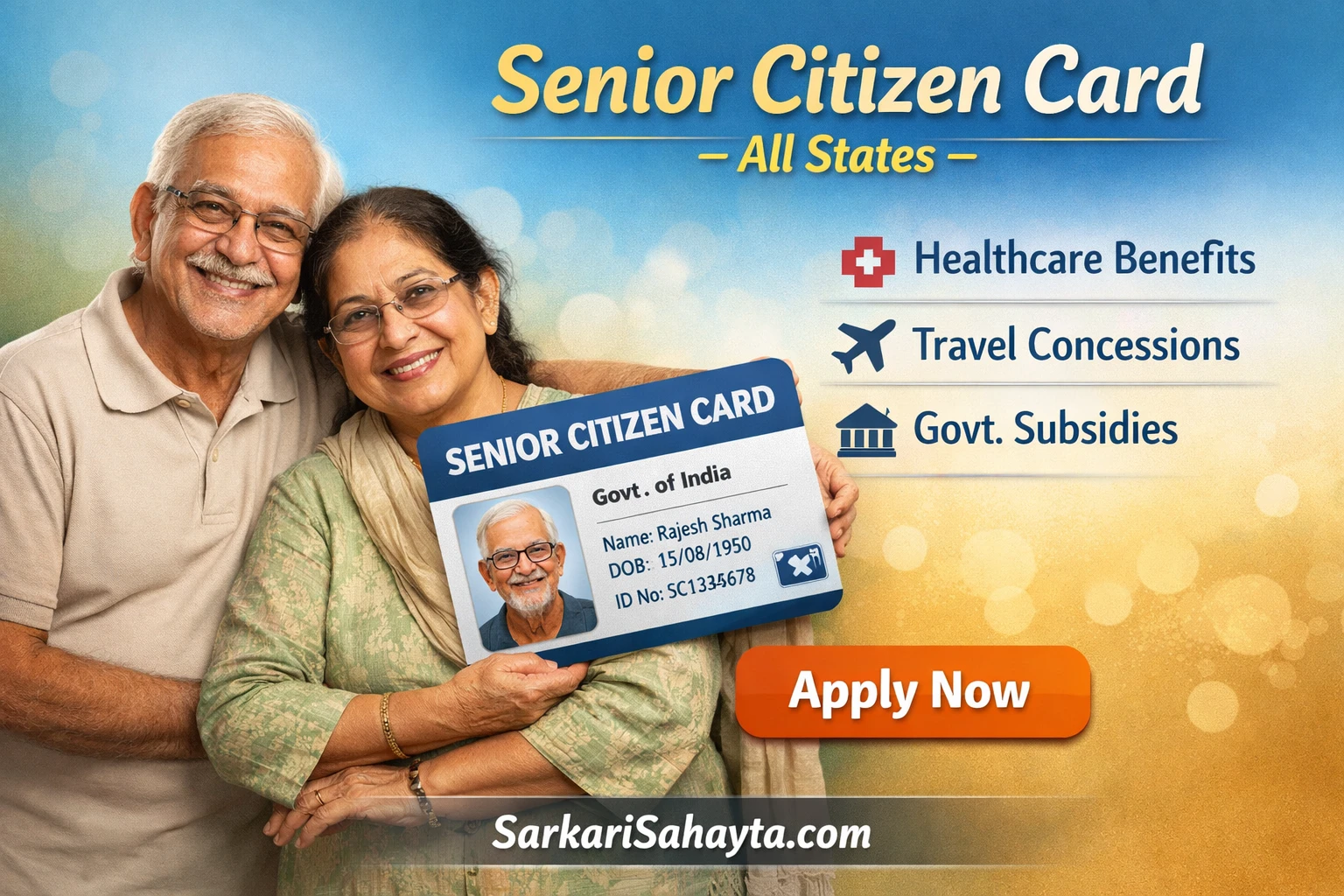
In 2026, the Senior Citizen Card serves as more than just an identity document—it is a gateway to a variety of government concessions, healthcare benefits, and priority services. Whether you are seeking travel discounts on Indian Railways, income tax exemptions, or priority access to government offices, having a valid Senior Citizen Card simplifies the process significantly.
1. Who is Eligible?
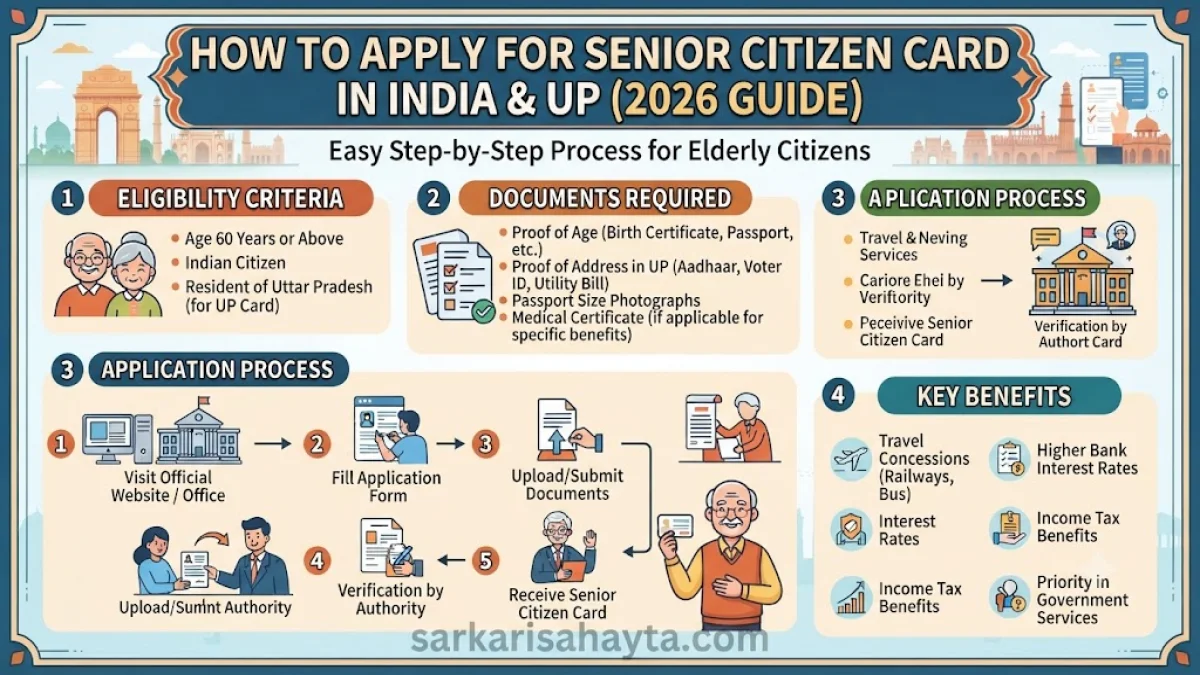
In India, any individual who has attained the age of 60 years or above is eligible to apply for a Senior Citizen Card. The process is decentralized, meaning it is issued by the respective State Governments. While eligibility remains consistent, the application procedure may vary depending on your state.
2. Key Benefits of Having a Senior Citizen Card
Possessing an official senior citizen identity card unlocks multiple advantages across public and private sectors:
- Rail & Air Concessions: Discounts on transport tickets and senior citizen priority booking queues.
- Healthcare: Priority in government hospitals, specialized geriatric care facilities, and discounted diagnostic rates.
- Financial Advantages: Higher interest rates on fixed deposits (FDs) and specialized savings schemes like the Senior Citizen Savings Scheme (SCSS).
- Tax Benefits: Higher income tax exemption thresholds and relaxed filing norms under the Income Tax Act.
- Priority Services: Faster processing in government offices, banks, and utility service centers.
3. Required Documents for 2026
The documentation has been simplified to minimize bureaucratic hurdles:
- Proof of Age: Aadhaar Card, Birth Certificate, 10th Class Marksheet, Voter ID, PAN Card, or Passport (Minimum age: 60 years).
- Proof of Address: Ration Card, Electricity Bill, Voter ID, or Passport.
- Photographs: 2-3 recent passport-sized color photographs.
- Medical/Blood Group: Blood group certificate or medical summary (optional, recommended for emergency cards).
4. How to Apply for a Senior Citizen Card in Uttar Pradesh (UP)
Unlike states with dedicated online portals, Uttar Pradesh handles senior citizen identification primarily through local governance structures:
- Offline Application: Visit your nearest District Social Welfare Office (Samaj Kalyan Vibhag) or local Tehsil office.
- Form Submission: Fill out the official application form with mandatory details (Name, DOB, Address, Emergency Contact) and attach self-attested document photocopies.
- Acknowledgment: Submit the physical application file to the designated officer and collect your acknowledgment reference number.
- Alternative Identification: In many parts of UP, government authorities and banks also accept your Aadhaar Card or PAN Card as absolute proof of age (60+) to avail benefits without requiring a separate physical card.
5. Common Issues & Solutions
- The 'Age Proof' Gap: If a birth certificate is missing, an affidavit sworn before a Magistrate or a certificate from a local Panchayat/Municipal office is accepted.
- Address Mismatch: Ensure your Aadhaar card address matches your current residential jurisdiction to prevent processing delays.
- Card Lost: If a digital or physical card is lost, check your state portal or visit the district welfare office to request a reprint.
Conclusion
The Senior Citizen Card is an essential tool for ensuring a dignified and comfortable life in your golden years. By keeping your documents updated and synchronized with your Aadhaar, you can ensure smooth processing whether you apply through local administrative offices in Uttar Pradesh or via digital portals in other states.
Disclaimer: Always verify local district or state guidelines before submission, as specific documentation rules can vary by region.