Overview of the Ration Card System in 2026
India's Ration Card System is one of the oldest and most trusted welfare programs ensuring food security for millions of families. In 2026, new reforms under the National Food Security Act (NFSA) and the One Nation One Ration Card (ONORC) initiative have made the process smarter, faster, and more transparent.
What is a Ration Card?
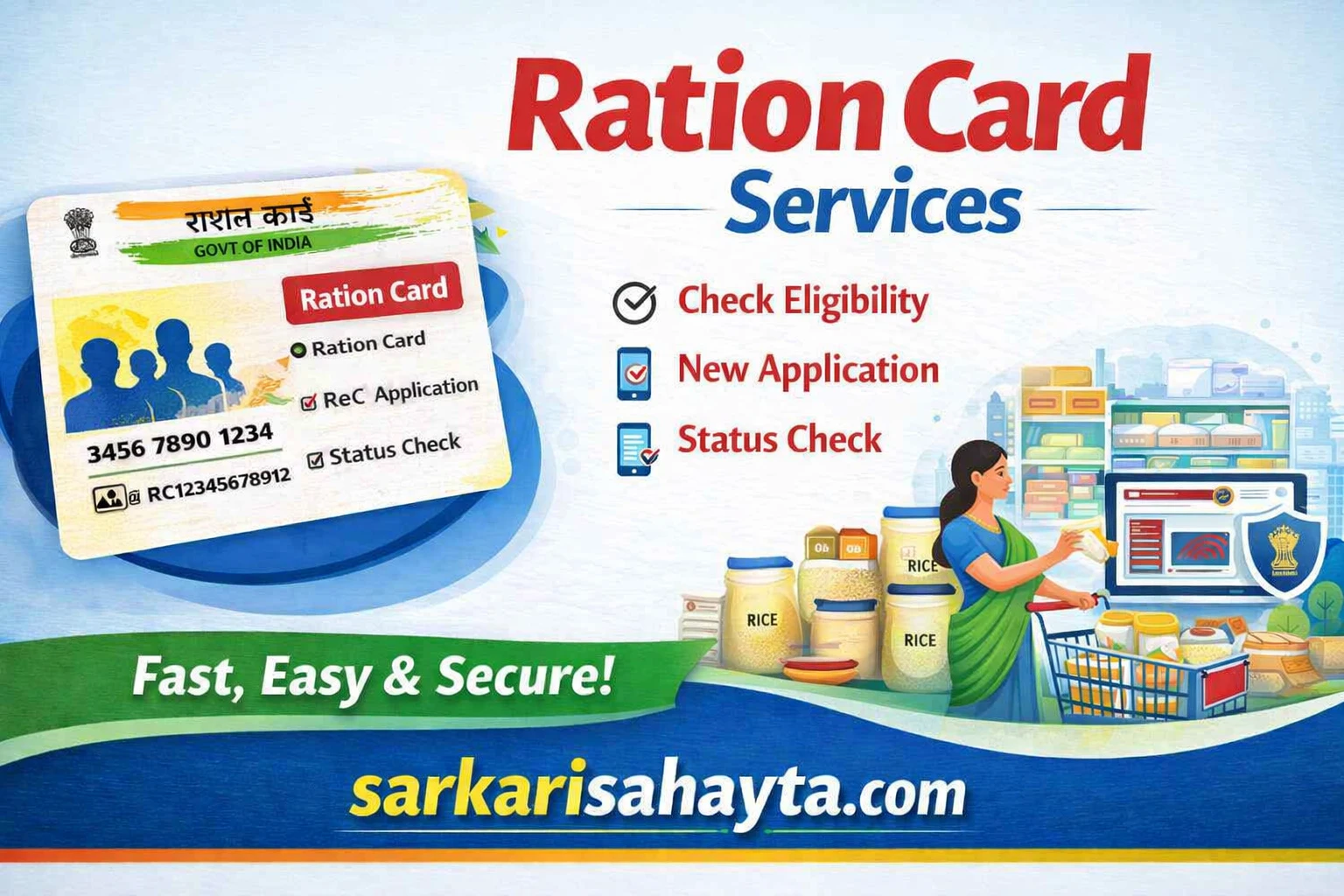
A Ration Card is an official document issued by the State Food and Civil Supplies Department that allows eligible households to purchase essential commodities—such as rice, wheat, sugar, and kerosene—at subsidized rates through the Public Distribution System (PDS). It also serves as a valid proof of identity and residence for various government schemes.
Types of Ration Cards in India
- APL Card (Above Poverty Line): For families with income above the poverty line; provides limited subsidy benefits.
- BPL Card (Below Poverty Line): For economically weaker families; entitles higher subsidy allocations.
- Antyodaya Anna Yojana (AAY): Designed for the poorest of the poor households; offers 35 kg of food grains per month.
- Priority Household (PHH): Introduced under NFSA 2013; covers vulnerable groups such as widows, senior citizens, and differently-abled persons.
Latest Rules and Reforms for 2026
- Mandatory e-KYC verification for all listed family members using Aadhaar.
- Introduction of a ₹1,000 monthly family benefit disbursed via Direct Benefit Transfer (DBT).
- Nationwide portability through the One Nation One Ration Card framework, allowing access to benefits anywhere in India.
- Smart PDS integration featuring digital biometric authentication at Fair Price Shops (FPS).
Eligibility Criteria
- Applicant must be a permanent Indian citizen.
- The applicant's family must not possess an active ration card in any other state.
- Income certificates must precisely match the selected category (APL/BPL/AAY/PHH).
- Valid Aadhaar numbers are compulsory for every family member.
Step-by-Step Online Application Process
- Visit your respective State Food and Civil Supplies Department portal or the Sarkari Sahayta Ration Card Service.
- Select the option to Apply for New Ration Card 2026.
- Fill in accurate personal details, addresses, family member info, income brackets, and Aadhaar numbers.
- Upload required supporting documents (PAN, Aadhaar, income certificate, photograph).
- Submit the form and retain the generated application reference number.
- Track real-time status online under the Application Status Check section.
Mandatory Documents Required
- Aadhaar Cards of all family members
- Proof of residence (Electricity bill, water bill, or rent agreement)
- Income certificate issued by a competent state authority
- Passport-size photographs of the head of the family
- Surrender certificate of old ration card (if applicable)
Mandatory e-KYC Verification Process
Under the new Mandatory e-KYC Rule 2026, every individual registered on a ration card must authenticate their identity using Aadhaar. Verification can be executed via:
- Online OTP authentication on the registered mobile number.
- Offline biometric fingerprint scans at local Fair Price Shops (FPS).
Failure to complete e-KYC authentication may lead to the temporary suspension of family welfare benefits.
Key Benefits of Holding a Ration Card
- Assured access to highly subsidized food grains under NFSA 2013.
- Eligibility for the ₹1,000 monthly cash welfare benefit.
- Serves as core proof of identity for official documents like PAN cards, Voter IDs, and Passports.
- Nationwide portability via ONORC ensuring uninterrupted rations across state borders.
- Enhanced system transparency and reduced corruption through digital authentication.
Frequently Asked Questions (FAQs)
- Can I apply for a ration card if I relocate to another state?
- Yes, under the ONORC framework, you can access and transfer entitlements after completing Aadhaar and residency verification.
- How long does it take to issue a new ration card?
- Typically 15 to 30 working days following document verification and e-KYC completion.
- Can I update my registered mobile number online?
- Yes, most state portals permit mobile number modifications through secure OTP verification.
- Is there any official fee for ration card applications?
- Applications are generally free across states, though service centers may charge a nominal processing fee (₹10 – ₹50).
- Can I download a digital copy of my ration card?
- Yes, once approved, digital ration card PDFs can be downloaded directly from your state's official portal.
Conclusion
The Ration Card Services 2026 mark a significant evolution in India's welfare administration. By integrating digital authentication, nationwide portability, and direct cash benefits, the initiative guarantees food security and financial resilience for millions of households.
For millions, the ration card remains much more than a subsidy document—it is a vital lifeline ensuring dignity, nutrition, and empowerment.
Disclaimer: Always verify guidelines, service fees, and portal updates through official government channels. Avoid unauthorized third-party agents.