
Last Updated: June 20, 2026
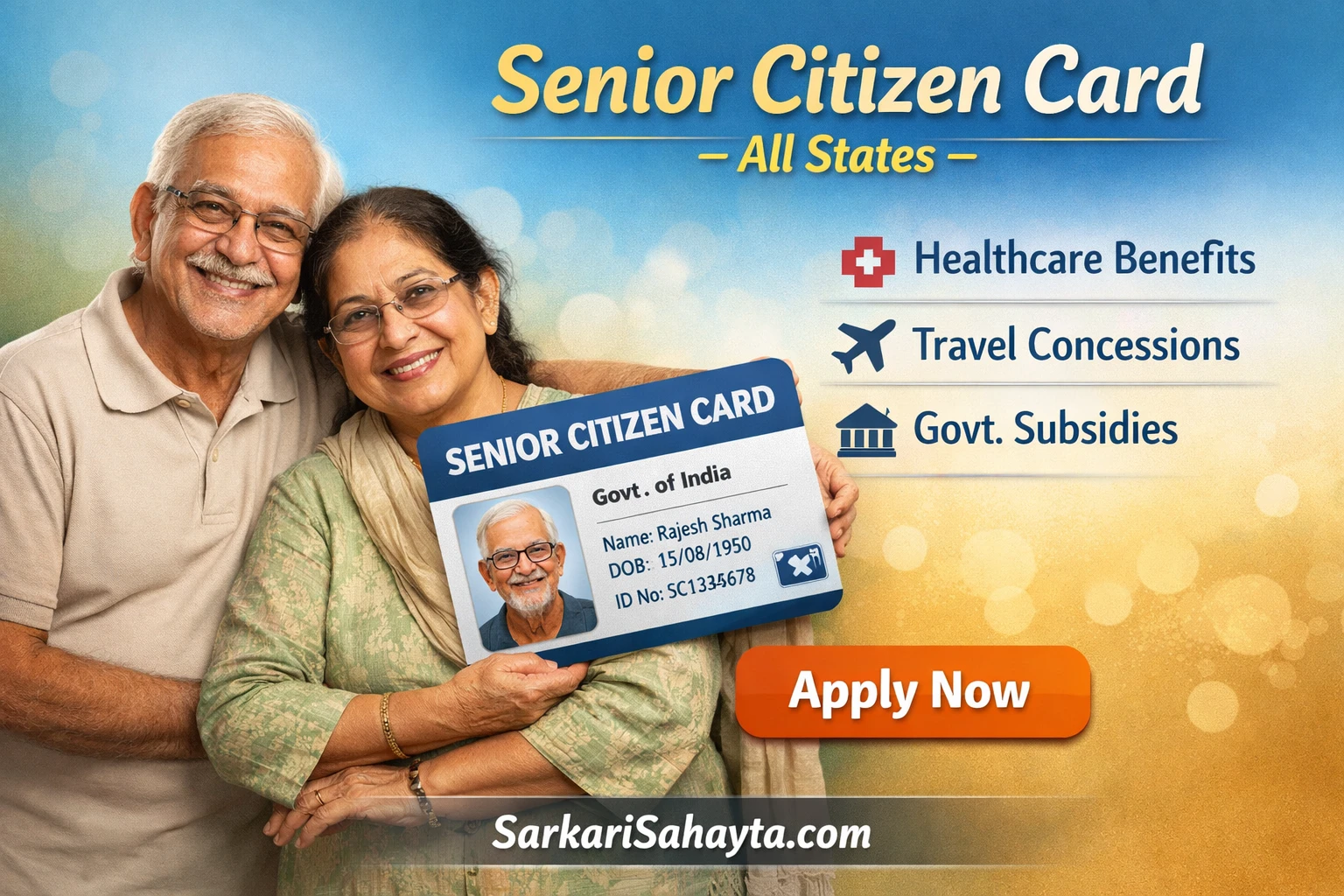
In 2026, the Senior Citizen Card serves as more than just an identity document—it is a gateway to a variety of government concessions, healthcare benefits, and priority services. Whether you are seeking travel discounts on Indian Railways, income tax exemptions, or priority access to government offices, having a valid Senior Citizen Card simplifies the process significantly.
1. Who is Eligible?
In India, any individual who has attained the age of 60 years or above is eligible to apply for a Senior Citizen Card. The process is decentralized, meaning it is issued by the respective State Governments. While the eligibility remains consistent, the application portal may vary depending on whether you reside in a state like Karnataka, Maharashtra, or Delhi.
2. Key Benefits of Having a Senior Citizen Card
- Travel Concessions: Discounts on state transport buses and priority services in air travel.
- Healthcare: Priority in government hospitals and specialized geriatric care facilities.
- Financial Advantages: Higher interest rates on fixed deposits (FDs) and specialized savings schemes like the Senior Citizen Savings Scheme (SCSS).
- Taxation: Higher income tax exemption limits and reduced tax filing hassles under various sections of the Income Tax Act.
- Priority Services: Faster processing in government offices, banks, and utility service centers.
3. Required Documents for 2026
The documentation has been simplified to minimize bureaucratic hurdles:
- Proof of Age: Birth Certificate, 10th Class Marksheet, or Passport.
- Proof of Identity: Aadhaar Card (Highly recommended for digital verification).
- Proof of Address: Voter ID, Utility Bills, or Rent Agreement.
- Medical Certificate: In some states, a blood group report may be required for the card.
- Photographs: Recent passport-size photographs.
4. The Application Process
Most states have moved the application process online to ensure convenience:
- Visit the State Portal: Search for your state’s "Social Welfare Department" website or the official "Senior Citizen Portal."
- Registration: Create a user account using your mobile number.
- Fill the Application: Enter personal details and upload scanned copies of the required documents.
- Verification: Local authorities may verify your age and residence. In some cases, a physical visit to the Social Welfare Office might be required.
- Card Issuance: Once approved, the digital card is generated. Many states now provide a QR-coded digital card that is just as valid as the physical plastic card.
5. Technical Tutorial: Digital Verification
If you receive a digital Senior Citizen Card, ensure it contains a QR Code. This code can be scanned by official authorities to verify your details in real-time. If you applied via an app, ensure you keep a saved copy in your 'DigiLocker' to avoid losing the digital certificate.
6. Real-Life Scenarios and Common Issues
- The 'Age Proof' Gap: Many senior citizens born in rural areas lack a birth certificate. Solution: An affidavit sworn before a Magistrate or a certificate from a Panchayat/Municipal office is usually accepted as an alternative.
- Address Mismatch: If your address on the Aadhaar doesn't match your current residence, the local welfare office may delay the card. Fix: Update your Aadhaar address before applying.
- Card Lost: If the physical card is lost, you do not need to apply from scratch. Visit the state portal, log in, and click 'Reprint' or 'Download Digital Copy.'
7. Important Security Advice
Do not share your Senior Citizen Card details with unverified online platforms promising "premium benefits" in exchange for fees. Official Senior Citizen Cards are issued by the State Government, and any service fee involved is minimal and fixed by the government.
Conclusion
The Senior Citizen Card is an essential tool for ensuring a dignified and comfortable life in your golden years. It streamlines access to critical services and protects your right to priority treatment. By keeping your documents synchronized with your Aadhaar, you can ensure that your application is processed without delays.
Disclaimer: Always check the official website of your State Government's Social Welfare Department, as the application link and specific documentation rules can vary by region.
📌 What is a Citizen Card?
A Citizen Card is an official identity document issued by the government to its citizens. It usually contains:
- 👤 Full Name
- 📅 Date of Birth
- 🪪 Unique Identification Number
- 📸 Photograph
- ✍️ Signature
- 🧬 Biometric Data (fingerprints/iris scan)
It acts as proof of identity, residence, and citizenship, and is often linked to digital services for convenience.
🎯 Importance of Citizen Card
The Citizen Card is more than just an ID. It is a gateway to accessing essential services:
- 🏛️ Government schemes and subsidies
- 💼 Employment verification
- 🏥 Healthcare services
- 📚 Education admissions
- ✈️ Travel and immigration
- 💳 Banking and financial transactions
📝 Application Process
Applying for a Citizen Card typically involves the following steps:
- 📄 Fill out the online/offline application form
- 📸 Submit photograph and biometric data
- 🪪 Provide proof of residence and birth certificate
- ✅ Verification by government authorities
- 📬 Card delivery by post or collection at office
💡 Benefits of Citizen Card
Citizen Cards provide multiple advantages:
- 🔐 Secure identity verification
- 🌐 Access to e-governance services
- 💳 Easy banking transactions
- 🏥 Health insurance portability
- ✈️ Simplified travel documentation
- 📊 Centralized citizen database for planning
⚖️ Legal Validity
Citizen Cards are legally recognized documents. They can be used in courts, government offices, and for official contracts. They often replace multiple IDs like voter cards, ration cards, and driving licenses. 📜
🌍 Global Examples
Different countries have adopted Citizen Cards in unique ways:
- 🇵🇹 Portugal – Citizen Card integrates tax, social security, health, and voting.
- 🇮🇳 India – Aadhaar card acts as a universal identity with biometric authentication.
- 🇪🇪 Estonia – Digital ID allows secure online voting and e-services.
- 🇬🇧 UK – Identity cards were proposed but later discontinued.
🔐 Security Features
Modern Citizen Cards include advanced security measures:
- 🧬 Biometric authentication
- 💻 Embedded microchips
- 🔒 Encryption of personal data
- 📶 Contactless smart card technology
📊 Role in Digital Governance
Citizen Cards are central to digital governance initiatives. They enable:
- 📱 Online service access
- 💻 E-signatures for contracts
- 📑 Paperless documentation
- ⚡ Faster delivery of welfare schemes
🚀 Future of Citizen Cards
With advancements in technology, Citizen Cards are evolving into smart digital identities. Future possibilities include:
- 🌐 Blockchain-based identity management
- 📱 Mobile-integrated digital IDs
- 🤖 AI-powered fraud detection
- 🧬 DNA-linked identity verification
📅 Conclusion
The Citizen Card is a revolutionary step in identity management. It simplifies access to services, enhances security, and supports digital governance. As nations move towards smart societies, Citizen Cards will play a crucial role in ensuring transparency, efficiency, and inclusivity. 🌟